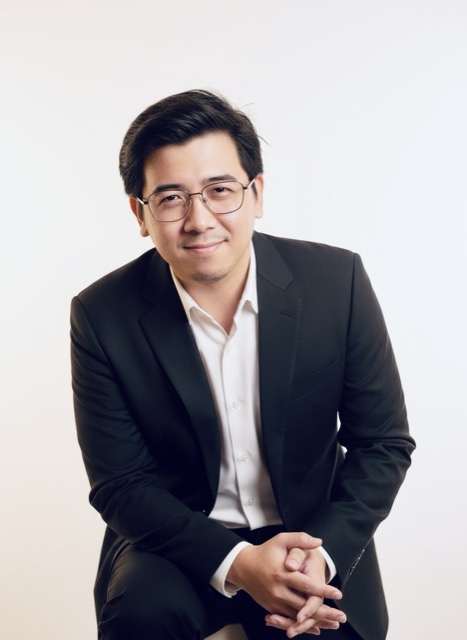
Min Khant Soe
Min Khant Soe
AI Engineer & Systems Architect
About

Min Khant Soe

AI Engineer & Systems Architect

I build production AI systems that connect models, agents, organizational knowledge, infrastructure, and real-world workflows.

Senior AI Developer
The Brooker Group PCL
Founder
SoeMindAI, Inc., USA
Bangkok
Thailand
Enterprise AI
Production systems
Private LLM
GPU inference infra
Multimodal
Agent pipelines
Physical AI
Vision · Edge · Robotics
Featured Work

Flagship systems

01

Organizational Second Brain

Enterprise AI architecture connecting private models, organizational knowledge, agents, and internal systems — ingestion, indexing, retrieval, and LLM reasoning with agents that search documents, query databases, and produce reports.

Private LLM · RAG · vLLM · Agents
02

SoeMind

An AI creative director for small businesses and creators. From one plain-language brief, the agent plans the content, shows the credit price, waits for approval, produces every piece — images, video scenes, voiceover, music, captions — assembles the final video, and publishes it to Facebook, Instagram or TikTok once a human approves. Multi-model, budget-aware, and strong in Burmese and Thai.

Agent orchestration · Multimodal · Multi-provider · Budget-aware · MCP server
03

Autonomous Driving / Physical AI

A driving policy trained with reinforcement learning in simulation and transferred to a real computer-controlled electric golf cart — a hands-on study in sim-to-real transfer.

PPO · Semantic segmentation · CARLA · Jetson
Selected Systems

Production AI at The Brooker Group

As Senior AI Developer, Min works across the complete lifecycle of an AI system: identifying business problems with leadership, selecting architectures, designing databases and backend services, building user-facing applications, integrating models and agents, deploying GPU infrastructure, and controlling cost — building an interconnected internal AI environment rather than isolated tools.

01

Organizational AI Assistant

Private LLM · RAG · Agents · Semantic search

An internal intelligence system allowing department heads to query organizational knowledge and operational data, grounded in internal documents and structured business data.

Enterprise AIPrivate LLM
02

Investor Intelligence Pipeline

Data ingestion · Entity tracking · Summarization

Converts fragmented notes, documents, and spreadsheets into structured investor intelligence: interactions, milestones, status, and next actions.

Data systemsAI automation
03

VC Activity & Risk Tracking

Activity histories · Risk indicators · Dashboards

Turns venture-capital information into structured intelligence with company tracking, risk indicators, and AI-generated summaries.

Data systemsEnterprise AI
04

Smart Career Portal

Profiles · Skills graph · Recommendations

Makes employee career development structured and data-driven by connecting profiles, skills, career interests, roles, learning opportunities, and skill gaps.

HR techAI-assisted
05

Internal HR Platform

Workflows · Structured HR data · Automation

Built from scratch: employee profiles, leave and calendar workflows, and process automation, with a long-term direction of AI-assisted skills intelligence.

Platform engineering

A core engineering belief shows up here: not every problem requires AI, and an AI system still needs strong conventional software underneath it.

Experience

Where the work happened

2023 — Now

Senior AI Developer

The Brooker Group PCL · Bangkok, Thailand
AI engineering · Systems architecture · Enterprise AI

Primary technical owner of AI, reporting to the CEO. Production AI across internal organizational workflows, private LLM infrastructure (DGX-class GPUs, vLLM, benchmarked on tokens/sec, time-to-first-token, and concurrency), knowledge systems, agents, and full-stack applications — with cloud cost treated as an engineering problem, not an accounting one.

2022 — 2023

Research Assistant

AI Center, Asian Institute of Technology
Computer vision · 3D perception · Edge deployment

Depth-camera trench measurement system for Thailand’s Metropolitan Waterworks Authority — point clouds, measurement algorithms, Jetson field deployment.

2021 — 2023

Engineering Specialist

Kiddee Lab · Bangkok
Project-based technology education

Taught machine learning, Python, web development, IoT, robotics, embedded systems, and computer vision through hands-on projects.

SoeMindAI, Inc.

Building AI-native software where agents are part of the product architecture, not an add-on.

Founded in 2026 and incorporated in Delaware, SoeMindAI is a product company. Its product is SoeMind: an AI creative director that plans, prices, produces and publishes marketing content for small businesses, creators and agencies. It grew out of Min’s open-source SoeMind Forge toolkit.

Director Desk flow
  1. Brief
  2. Questions
  3. Plan & price
  4. Approve
  5. Produce
  6. Review
  7. Publish

SoeMind

You direct. The agent plans, prices and produces.

Most generative AI tools are single-step: one prompt, one output. Real marketing production is a pipeline. In SoeMind you describe a goal — “a 15 second Reel for my bakery’s new croissant” — and the agent asks the few questions that matter, writes the script and scene plan, shows a production plan with the credit price of every step, and generates nothing until you approve. Then it produces the images, video scenes, voiceover, music and captions, assembles the video, checks it against the brief, and can draft and schedule the post.

You stay in control

Every paid step shows its price before it runs and waits for approval, or runs inside a budget you set. Redo one scene without paying for the whole video. A post goes live only after a human approves it. Your brand — colors, tone, logo, characters, products, voice — lives in a Project and is reused automatically.

Director Desk

Chat with the AI director. It asks only what it needs, writes the idea and scene plan, prices every step in credits, and produces after one approval. Auto-run mode works inside a budget you set.

Studio

Hands-on tools for one asset at a time — image, video, talking avatar, lip-sync, voiceover, voice clone, music, sound effects, transcription, captions, re-dubbing — with the price on the button.

One-click

About a hundred proven formats (what-if ads, testimonials, founder stories, explainers): one short form, one price, one approval.

Social

Publish and schedule to Facebook Pages, Instagram and TikTok, read insights on what works by hook, topic, format and timing, and plan the next campaign from the evidence. Nothing posts without a human approving it.

MCP connector

SoeMind is also an MCP server, so Claude, ChatGPT or any MCP client can plan and produce content in a user’s account — every paid action still confirmed by the user.

Agent planning · Multimodal generation · Tool use · Multi-model routing · Human approval · MCP server

Model-agnostic by design: the agent picks per scene across Veo, Seedance, Kling, Gemini Omni, Nano Banana, GPT Image and more, on quality, cost, speed and task. Built for English, Burmese and Thai first — localization covers script, voice, captions, presenters and visuals, not just translation — with the interface available in 19 languages. Credits are priced before anything runs; failed generations are refunded automatically.
Also: SoeMind Foundry — an experimental product-building program turning ideas into working AI or SaaS products in about four weeks, built on one principle: validation matters more than polishing an MVP nobody wants.
Research & Physical AI

Before agents: perception

Research

Sim-to-real Autonomous Driving

Master’s research · Asian Institute of Technology
PPO
CARLA
Jetson
Semantic segmentation
UNet / ResNet
Real-world control

Trained an autonomous driving policy with reinforcement learning (PPO) and UNet/ResNet semantic segmentation in the CARLA simulator, then transferred it to a computer-controlled electric golf cart with real steering, throttle, and braking. A hands-on lesson in sim-to-real transfer: what works in simulation often breaks against real noise, lighting, and mechanical limits.

Point-cloud Trench Measurement

AIT AI Center · for the Metropolitan Waterworks Authority (MWA)
Intel RealSense
Point clouds
Jetson Xavier NX

A depth-camera system for water-pipe trench quality control: point-cloud preprocessing, coordinate transformation, trench profiling, and measurement algorithms, achieving errors below roughly five percent and deployed on an NVIDIA Jetson Xavier NX for field use.

This background feeds a continuing interest in Physical AI: connecting intelligence to sensors, actuators, robots, and vehicles — Jetson, Raspberry Pi, STM32, ESP32, Arduino.

Teaching & Mentoring

From intuition to implementation

Machine Learning
Computer Vision
Python
IoT
Robotics
Embedded Systems

Project-first teaching focused on taking students from intuition to implementation and experimentation — an image-classification project before the equations. That mentoring has reached publication level: Min guided a 16-year-old Thai student through a research project that became a peer-reviewed IEEE paper, “Reinforcement Learning application on Gamification”, presented at the 2023 8th International STEM Education Conference (iSTEM-Ed).

Education

Academic background

2021 — 2023
M.Eng. Data Science & Artificial Intelligence
Asian Institute of Technology
CGPA 3.40 · ~600,000 THB in scholarship funding · Research: sim-to-real autonomous driving
2017 — 2021
B.Eng. Mechatronics Engineering
Assumption University of Thailand
Magna Cum Laude · CGPA 3.79 · Two-time Academic Merit Scholarship
2013 — 2016
B.A. English Literature
Yangon University of Distance Education
CGPA 3.32 · Shapes how he communicates: explaining complex technology clearly
Technical Skills

The toolbox

Programming

Python, TypeScript, JavaScript, C++, Go

AI & Machine Learning

LLMs, AI agents, RAG, PyTorch, TensorFlow, deep learning, reinforcement learning, generative AI, multimodal AI

LLM Ecosystems

GPT, Claude, Gemini, Llama, Qwen, Hermes

Computer Vision

YOLO, SAM, ResNet, UNet, OpenCV, segmentation, object detection, point clouds

Generative Media

Veo, Seedance, Kling, Gemini Omni, Nano Banana, GPT Image, FLUX, image-to-video, lip-sync, text-to-speech, voice cloning, AI music

Backend & Frontend

FastAPI, REST APIs, React, Next.js, Vite, Tailwind CSS

Data & Infrastructure

PostgreSQL, MySQL, Redis, AWS, Docker, NGINX, RunPod, GPU deployment, private AI infrastructure

Hardware & Edge

NVIDIA DGX, NVIDIA Jetson, Raspberry Pi, Arduino, STM32, ESP32

Principles

Engineering philosophy

01
AI should solve real problems

An impressive demo is not enough. The question is whether the system saves time, improves decisions, removes repetitive work, or creates a capability that did not exist before.

02
AI agents need tools

A language model alone is not an agent. The model provides reasoning and planning; databases, APIs, search, document systems, and generation models provide the ability to act.

03
Human direction remains important

Autonomy should not automatically mean removing humans. For high-value decisions and expensive generation tasks, the best pattern is: human objective, AI plan, human review, AI execution, human feedback.

04
Products should be model-agnostic

Models change quickly. Product logic, agent logic, and model providers should stay separated so models can be swapped as the technology improves.

05
Infrastructure matters as much as the model

Production AI needs reliable APIs, security, observability, latency control, and fallback systems. A powerful model on poor infrastructure is still a poor product.

06
Cost is an engineering constraint

GPUs, model APIs, and generation pipelines get expensive fast. Cost should shape model selection, caching, retry strategy, and architecture from day one, not appear later as an accounting surprise.

Alongside these sits Responsible AI: human oversight, privacy and organizational data protection, reliability, transparency, and hallucination risk — especially in enterprise settings that handle confidential information.

My View of AI-Native Software

Where this is going

Traditional software
Action Predefined function Output
AI-native software
ObjectiveReasonPlanToolsExecuteObserveAdjust
The future is not agents instead of software engineering. It is software engineering + agents + intelligent interfaces.

Let’s build something useful.

Interested in enterprise AI, agent systems, multimodal products, or AI infrastructure?

Book a conversation